
Nor'easter Cleanup in Methuen: Clearing Yard and Tree Debris
Between nor'easters, heavy wet snow and summer storms, a big tree or cleanup job in the Valley produces more than a municipal program can take - and the yard-waste ban means it stays its own clean load.
In this guide
- New England storms
- The yard-waste ban
- When you need a container
- Sizing tree and brush debris
- Being ready before the season
The Merrimack Valley gets its share of violent weather, and much of it lands on the trees. Nor'easters, heavy wet spring snows and summer thunderstorms all bring down limbs and whole trees across Methuen and the surrounding towns. Clearing that debris well is worth a plan before the season, not just after.
New England storms
Nor'easters drive wind and heavy precipitation that snap mature limbs; wet spring snows split trees still holding leaves; and summer microbursts bring down whole trees across the older neighborhoods with their mature canopy. When a big event rolls through, a lot of properties are clearing at once, and the debris volume dwarfs a normal week.
The yard-waste ban
Massachusetts bans yard waste and leaves from disposal entirely, so storm debris is kept as its own clean load for composting or wood processing - it can't be thrown away with the trash. Routine curbside handles a household's trimmings, but a real tree job or a storm cleanup produces far more, and a contractor's or landscaper's debris the town won't take at all.
When you need a container
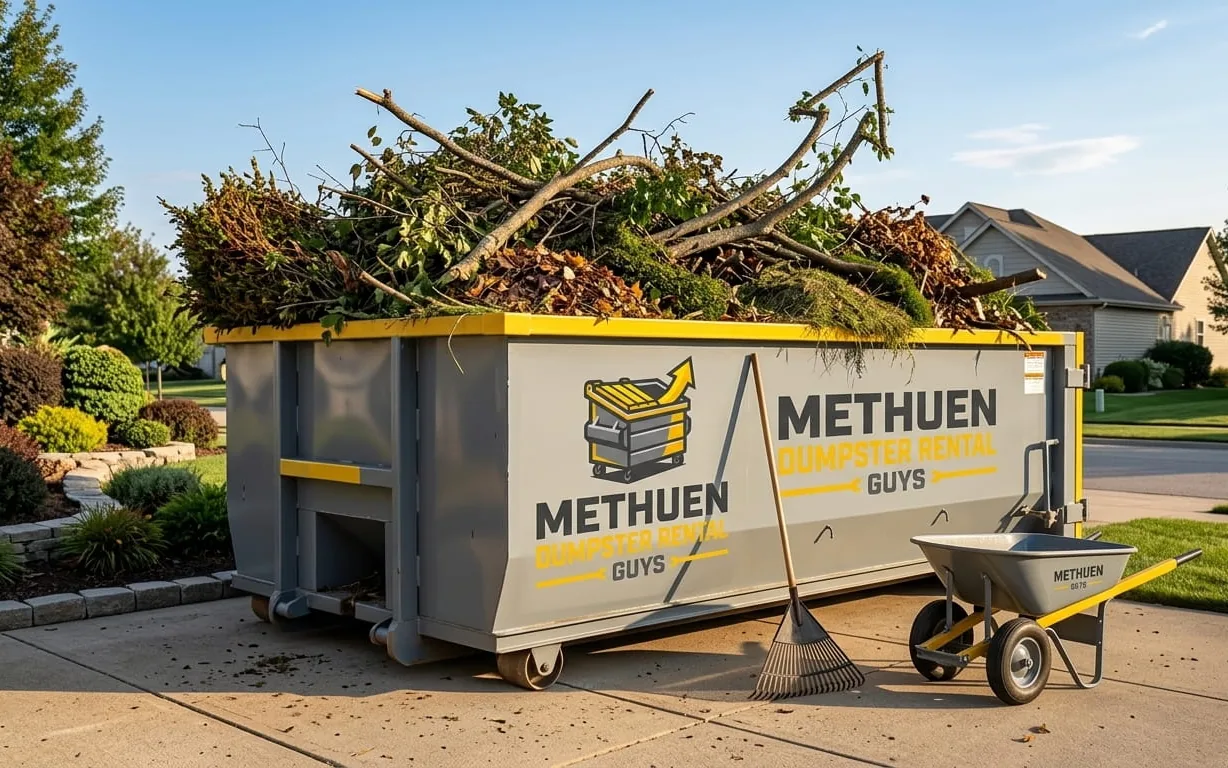
When a big tree comes down, a lot gets cleared, or a storm leaves a property full of debris, a roll-off lets you clear it in one push rather than staging pile after pile against a program limit. Drop the container, load it at your pace, and we haul it - kept as a clean green-waste load so it goes to composting or processing, as the ban requires.
Sizing tree and brush debris
Vegetative debris is light but voluminous, so tree and brush jobs usually want a 30 or 40 yard - the volume, not the weight, is the limit. The exception is stumps and root balls, which carry a lot of clinging New England soil and are genuinely heavy, so flag those when you call. Keeping clean green waste separate from any structural or fence debris keeps it legal and its handling efficient.
Being ready before the season
After a major storm, demand for containers spikes across the whole Valley at once. Being locally based means we can usually respond quickly, but the callers who reach us early get the easier scheduling. If you know you have vulnerable trees or a lot to clear, it is worth having our number ready before the weather rather than after.
Book a container in Methuen
One flat rate covering delivery, seven days, pickup and disposal.
(978) 645-3643Questions readers ask about this
Will the town take my storm debris?
Only routine resident trimmings - not a real tree job's volume, and not a contractor's or landscaper's debris. Massachusetts bans yard waste from disposal, so it's kept as its own clean load and a roll-off clears it in one push.
What size do I need for tree and brush debris?
Usually a 30 or 40 yard, since vegetation is bulky but light. Stumps and root balls are heavy with clinging soil, so flag those - they can change the sizing.
Can you deliver quickly after a storm?
Usually yes, and being local helps - but demand spikes across the Valley when everyone clears at once. The earlier you call after the weather, the easier the scheduling.
Do I have to keep yard waste separate?
Yes - Massachusetts bans it from disposal, so clean green waste is kept as its own load for composting or processing. Mixing in structural debris loses that and can cause problems.