
Where Does Your Debris Actually Go Under the Massachusetts Bans?
Waste in Massachusetts is not one stream but several, and the MassDEP bans give each a legal destination. Knowing which is which is how you keep a job cheap, clean and compliant.
In this guide
- Not everything goes to one place
- Household trash and the transfer station
- C&D debris and the bans
- Mattresses, textiles and electronics
- Recycling and clean materials
One of the most common misunderstandings about clearing a project is that it all goes to the same place. In Massachusetts it especially does not - the MassDEP disposal bans split waste into separate legal streams, and matching your material to the right one keeps disposal cheap and lawful.
Not everything goes to one place
Household trash, a resident's occasional bulky items, contractor C&D debris, concrete, mattresses, textiles, metal, electronics and clean recyclables each have a different route. Under the bans, mixing them either raises the cost or is simply not allowed. Here is how the main streams break down around Methuen.
Household trash and the transfer station
Curbside trash and recycling handle a household's routine waste. The Methuen Transfer Station takes a resident's own construction debris, but a contractor's load needs proof the material is from Methuen and that the contractor is a resident. So the transfer station is for a household's own output - not a paid project's debris.
C&D debris and the bans
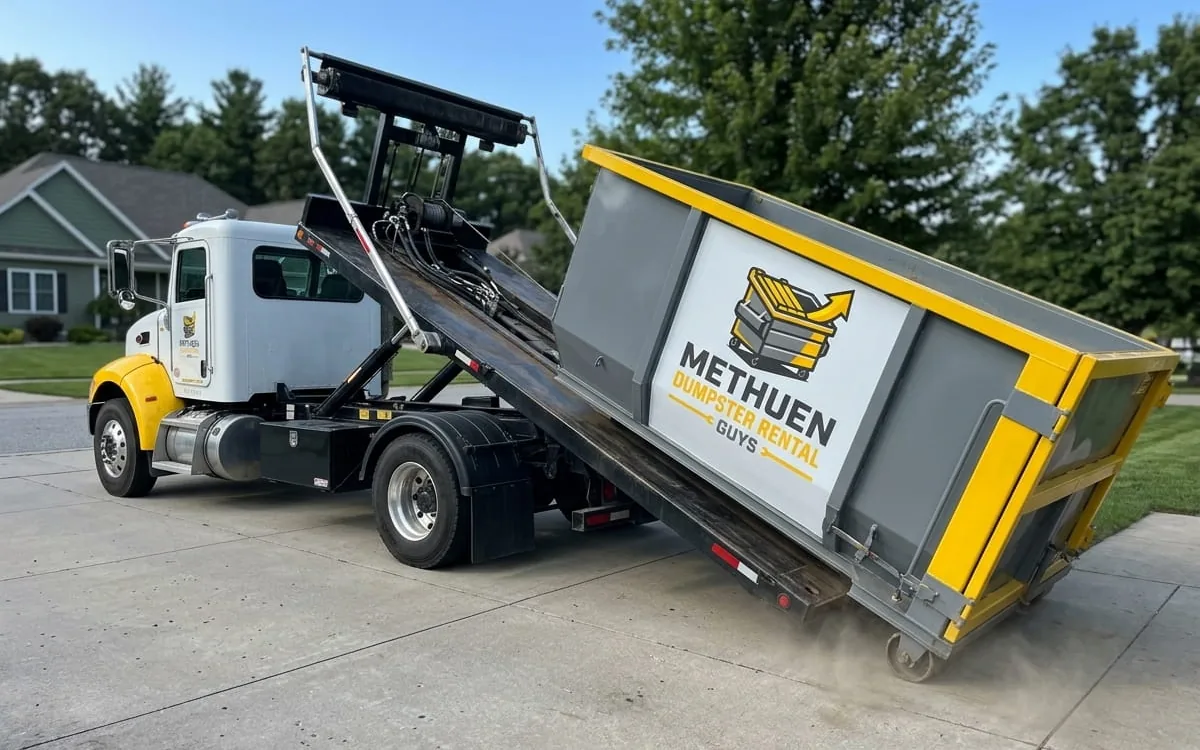
Construction and demolition debris - drywall, framing, flooring, shingles, fixtures - is a separate, regulated stream. Massachusetts bans asphalt, brick, concrete, metal and wood from disposal, so C&D goes to a licensed, MassDEP-permitted processing facility that sorts those materials for recycling. This is where a roll-off comes in: we haul the container to the right facility, tarped as state law requires.
Mattresses, textiles and electronics
Some things are banned from any dumpster or trash. Mattresses and textiles were added to the disposal bans - a hauler legally can't put them in the trash - so they route to a mattress recycler or textile drop-off. Household hazardous waste such as paint and solvents, and electronics, have their own drop-offs. Set these aside before a cleanout that will turn them up.
Recycling and clean materials
Under the bans, recycling isn't optional here. Clean concrete and brick are crushed and reused; clean wood, metal and cardboard are recycled; and yard waste is banned from disposal and kept for composting. Separating at the source isn't just cheaper on a Methuen project - it is the law, and it is how you keep a load from being rejected.
Book a container in Methuen
One flat rate covering delivery, seven days, pickup and disposal.
(978) 645-3643Questions readers ask about this
Does all my debris go to the same place?
No. Under the MassDEP bans each stream has its own legal destination - C&D to a licensed processing facility, mattresses and textiles to recyclers, yard waste to composting, hazardous waste and electronics to drop-offs.
Where does construction debris go?
To a licensed, MassDEP-permitted C&D processing facility that sorts the banned materials - asphalt, brick, concrete, metal and wood - for recycling. A roll-off hauls it there, tarped as state law requires.
What about mattresses and textiles?
They're banned from disposal in Massachusetts, so a hauler can't put them in the trash. They route to a mattress recycler or textile drop-off, not the dumpster.
Do I have to recycle concrete and metal?
Effectively yes - they're banned from disposal, so clean concrete is crushed and reused and metal is recycled. Keep those streams separate from general debris and the disposal is cheaper and compliant.